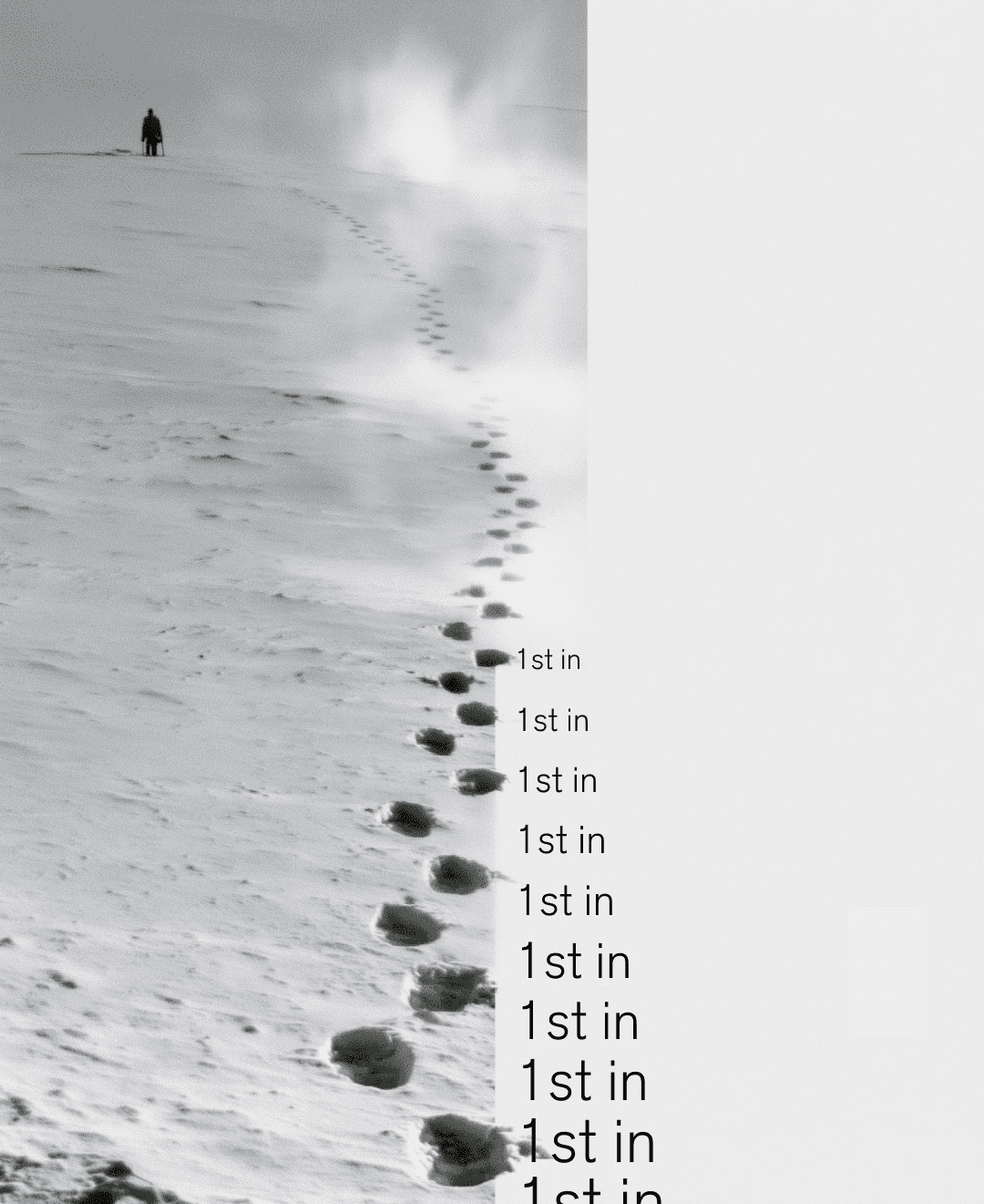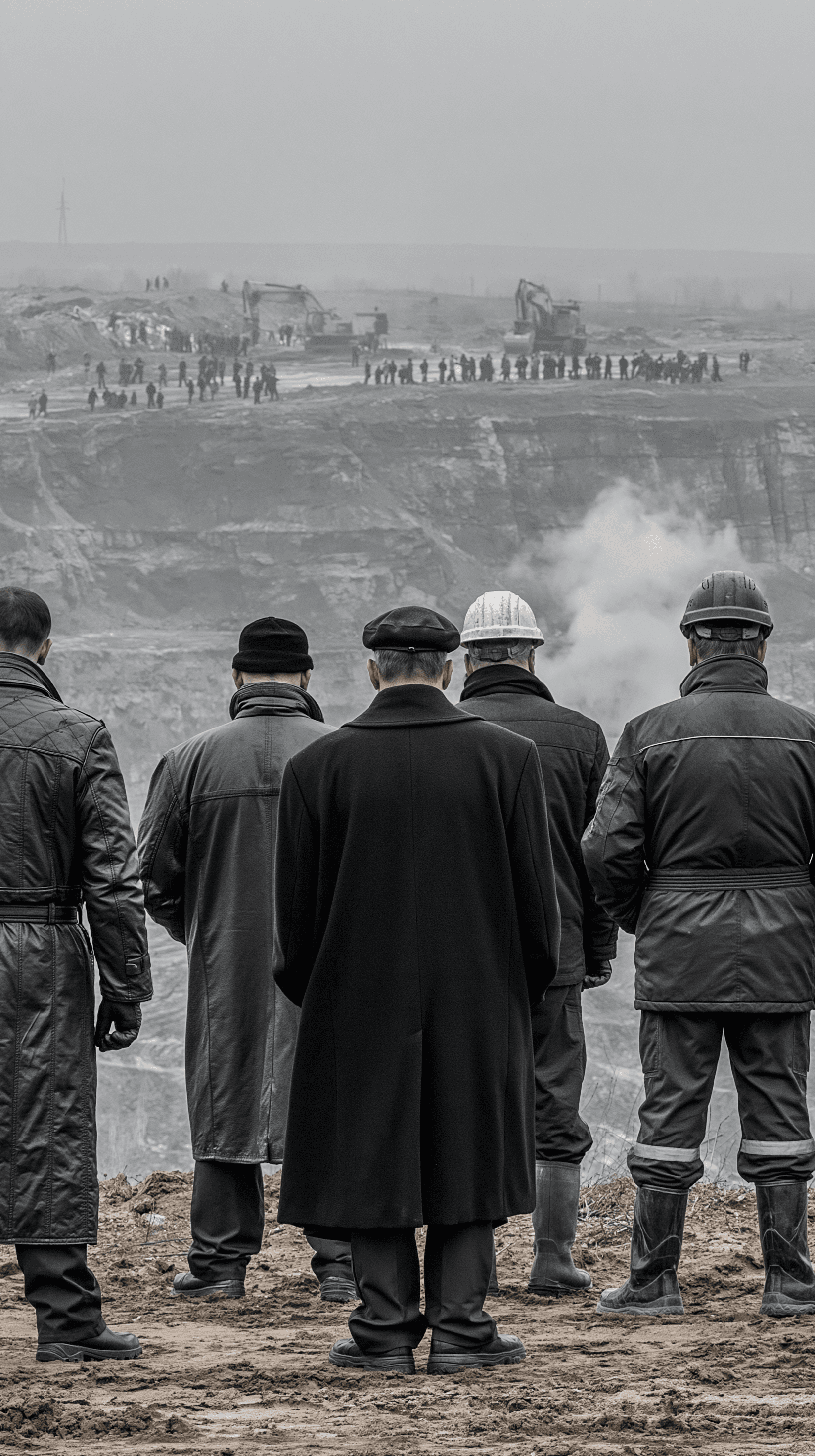

No metal has caused more suffering, more courage, and more madness than gold
No metal has caused more suffering, more courage, and more madness than gold. Then, at the end of the twentieth century, we discovered that seventeen more metals were the key to controlling the world. Mining is an aging industry, and demand cannot patiently wait. It started in 2016, when Roman Teslyuk founded Earth AI to make discovery faster, cheaper, and cleaner. Now in 2026 five companies are searching for these metals. They are not competing directly, but in a sense they are, for minerals, for capital, for how to survive the competition, and for how to get along with the incumbents like Rio Tinto and BHP. The
Australian government requires mining companies to submit a vast amount of exploration data to the National Archive. At least 400 million geological cases, too vast to be processed by human team. This was the foundation of what we see in the following.
Earth AI, founded in 2016, realized this. Roman Teslyuk and Igor Grechko built a prototype, which they later called the Mineral Targeting Platform, MTP. And they trained the algorithm on the publicly available data in Australia.
Later they put a list of exploration companies in alphabetical order and literally cold-called them. ActiveX was the one who picked up the phone and said yes. They didn't even have to go past the letter A.
The first sign of competitive advantage, we already see it here. They were applying technology to an old industry. ActiveX needed a breakthrough, and Earth AI offered ActiveX speed in analyzing geological data with a competitive cost structure.
Now they had a client, a proof, a team, and the technology behind it.
These were the competitive advantages that made the two founding events of 2017 successful:
February 2017: The company secured its first official funding, in the form of a grant/prize money.
September 2017: Earth AI successfully raised a $600,000 seed funding round. This seed round was backed by investors like the Australian venture capital firm Blackbird Ventures, which chose to invest based on the founders' unique combination of deep geological domain expertise and extreme entrepreneurial "hustle".
At that time, its primary theoretical moat was based on data network effects.
According to Blackbird Ventures the company's competitive advantage was designed to compound over time through a specific feedback loop:
Public Data Foundation
Proprietary Client Inputs: As early clients used the software, they would upload the geological data into the platform, adding exclusive depth to the public data.
Compounding Accuracy: Earth AI's algorithms would learn from this newly uploaded private data, continuously improving the value and accuracy of its targeting software for all subsequent customers.
To turn the theoretical moat into a real one, they needed those proprietary client inputs, but most of the industry was skeptical of ML and AI in mining. The solution was to prove the algorithm worked, and to do the due diligence for the client.
So Earth AI radically transformed its competitive moat between 2018 and 2021 by pivoting to vertical integration:
Proprietary Hardware Development: Following its entry into Y Combinator, Earth AI spent the next few years developing its own Mobile Low-Disturbance (MLD) drilling equipment. This allowed them to physically prove that the sites their software identified were as promising as predicted.
The "Drill-to-AI" Feedback Loop: By bringing drilling in-house, Earth AI collapsed the fragmented supply chain of traditional mining into a single, continuous loop. When the AI identified a target, Earth AI's own teams could quickly mobilize to drill it, analyze the core samples, and feed the real-world "ground-truth" results back into the Mineral Targeting Platform (MTP).
Compounding Intelligence: This architecture meant that every drilling campaign directly trained and refined the AI model, making the system progressively smarter and widening their performance advantage over conventional competitors over time.
In-House Geochemical Labs: Even after Earth AI built its own drilling rigs, it hit a major bottleneck, third-party commercial laboratories.It caused delays. Because their AI relies on near real-time feedback to refine targets, this delay was crippling. To solve it, Earth AI built its own in-house geochemical analysis laboratory, cutting turnaround times. This immediate data ingestion lets their geologists adjust drill paths dynamically.
The moat is a self-reinforcing drill-to-data loop that no competitor can close without building its own hardware and lab, and by the time they do, Earth AI's model has already learned from many more campaigns.
Meanwhile, about two years later, an American team had the same idea. They were behind Earth AI, but for two reasons they had a chance: a different geography, and they tried to secure what Earth AI couldn't have at the beginning: exclusive proprietary data access. They raised capital to acquire all the data no one else wanted and developed their engine.
What comes after that is how they leveraged that data to find deposits, and a new business model to make themselves indispensable. Year by year, in every funding round, they entered a new layer of mineral exploration, from exploration, to discovery, to drilling, to real-time analysis of drilling data. They are aiming for vertical integration of the entire mining process.
KoBold is now entering the last phase, and their move into mine development says something remarkable: they turned a data company into a mining company, with an edge in both software and hardware.
KoBold's competitive advantage started with data no one else had, a business model built on taking equity in the mines, and cutting-edge hardware and deep tech.
Did KoBold take over Earth AI?
You choose KoBold if you have a massive project that needs world-class data integration and the financial firepower to build a mine. And you are willing to give away a big portion of the mine as well. You choose Earth AI if you are a tenement holder who wants your land physically drill-tested quickly, cheaply, and with zero upfront financial risk. Both take equity or royalties.
But what remains for those who come later?
The first two companies reached enough success that any newcomer has to be radically different.
When Terra AI came out from stealth, it didn't have to prove its AI was strictly "superior" at finding metals. It gained immediate attention by offering a completely different business model, powered by a different branch of artificial intelligence.
KoBold and Earth AI both want equity or royalties. Terra AI offered something else: the decision-making intelligence of a self-driving car, applied to the Earth's crust. All packaged as software that any mining company could plug into without giving up its mineral rights. To understand the competitive advantage Terra AI had in 2023 that the other two did not, you need to know the tech stack each of the three used.
Technologies
Imagine the ground beneath your feet is a locked room, and somewhere inside it there might be a pile of gold. You can't open the door. All you can do is knock on the walls and listen. Drilling a hole costs millions, so you want to knock smartly before you spend.
KoBold and Earth AI are like bloodhounds. You've shown the dog thousands of rooms that did have gold, and thousands that didn't. Now it has learned the smell of a gold room. You walk it down a hallway of locked doors and it points its nose at the three most promising ones. It doesn't know what's actually inside, it just recognizes a pattern it has seen succeed before. Fast, powerful, but only as good as the rooms it was trained on. It answers one question: "Which door?"
Terra AI is like an artist sketching the room you can't see. You know how an AI image generator can take a vague prompt and draw you a hundred different pictures that all fit? Terra does that with geology. It takes the faint echoes from your knocking and draws millions of possible versions of what the hidden room could look like, gold here, empty there, gold deeper down. Then it looks at all those drawings and notices: "they mostly agree the room is empty on the left, but they wildly disagree about the right side." So it tells you: don't waste a drill hole on the left, and your next knock should be aimed right, because that's where we're most confused. It answers a richer question: "What could be down there, and what's the single smartest move to remove our doubt?"
How Did Terra AI, 7 Years Behind, Enter the Same Market?
In 2023, the moat was not the technology you just read about, although it was different. It was the team. The founder, John, worked at KoBold Metals. In Silicon Valley, that means the guy knows the competition inside out. He knows what works, he knows where there is room to improve, and he knows KoBold won't bother to fix what they want to fix.
Instead of relying purely on statistical pattern matching, Terra AI's founders, who came from Stanford's Intelligent Systems Lab, NASA, and Boeing Phantom Works, applied algorithms originally designed for navigating autonomous vehicles and drones. They used a mathematical framework called a Partially Observable Markov Decision Process (POMDP), combined with deep reinforcement learning. Rather than just producing a prediction map, the AI acts as an autonomous agent: it simulates outcomes and recommends the exact next move. For instance where to drill. Their model is 125 000 faster than legacy models.
You see it again here: applying cutting-edge technology to an old industry. These are world-class founders, in the USA.
Their advantage was the combination of inside knowledge and, to be honest, sometimes the moat is the VC who backs you. Investors offer more than money. They were fast enough to make themselves indispensable to Rio Tinto. Once you are in, and it works, no one can displace you. The moat is established: a high switching cost.
Terra AI proved there was still a way in. But it got in with a Stanford team, autonomous-systems research, and Rio Tinto. That is a high door to walk through.
So what happens to the companies that arrive without any of that? KoBold raised over a billion dollars. Earth AI built its own drills and labs. Terra AI had the founders and the technology. The top of the market is taken. The question for everyone after is harder: what room is left, and is it enough to survive on?
Two companies are trying to answer that right now.
MinersAI started with $20,000 from an accelerator program in September 2023. enough to validate an idea, not much else.
The idea was to go further upstream than anyone else. KoBold and Earth AI fight over where to drill. MinersAI works on the step before that: the data itself. Exploration data in this industry is scattered, inconsistent, and hard to use. MinersAI's pitch is to aggregate it, clean it, and make it usable. To become the layer everyone else has to build on top of.
In January 2024 the company raised its first real round, $910,000, to move the platform from design to operational testing.
It is the most upstream position in this whole story. Whether that is a moat or just a starting point is the open question, the data MinersAI works with is mostly public, and cleaning it is hard work but not a secret. The bet is that if you organize the foundation first, everyone eventually has to come to you. Also as the early investor Creative Destruptive Lab says, MinersAI will be a market place. The real moat in this space comes from network effects.
MinersAI started with a small cheque and a big idea about data. The last company started somewhere stranger: a competition it chose to lose.
Mineural
Its core technology, IRIS, was built in September 2021 as an entry for the Frank Arnott Award, an international mineral exploration competition. According to the company, the team realized partway through that what they had built was too valuable to hand to a competition, so they withdrew, and turned it into a business instead.
It tells you something about how Mineural sees itself: as a technology company first. Its IRIS platform is a targeting engine, sold to explorers who want the software without giving up their ground. Same instinct as Terra AI. Mineural is the clearest test of the question this whole article keeps circling: in a market where the giants got in early and raised billions, is being clever and late enough?
What's Left to Build?
Every company in this story built its moat from what it could not have.
Earth AI could not afford to wait for third-party labs, so it built its own. It could not trust that clients would believe the algorithm, so it built the drills to prove it. KoBold could not buy geological credibility, so it spent years acquiring the data no one else thought was worth acquiring. Terra AI could not wait a decade to earn its way into Rio Tinto, so it walked in with a Stanford team and a founder who already knew where the doors were.
The constraint was the argument to build the moat.
MinersAI and Mineural are still early enough that the question has not been answered. MinersAI is betting that organizing the foundation is enough to make everyone build on top of it. Mineural is betting that a targeting engine sold without equity is a model the market has been waiting for. Both bets might be right.
But the framework that explains every moat in this story asks a difficult question: what did you lack that forced you to build something an incumbent cannot copy without becoming a different company? Earth AI's answer is in its drills and
its labs. KoBold's answer is in a century of dark data. Terra AI's answer is a team.
MinersAI and Mineural have not answered it yet. That is not a verdict. In this industry, the answer sometimes takes years to become visible. The question is whether they find their constraint before someone with dormant inventory decides to activate it.
References
Blackbird Ventures. (2017). Notes on our latest investment: Earth AI. https://www.blackbird.vc/blog/notes-on-our-latest-investment-earth-ai
Canadian Mining Journal. (2025, March 13). Micromine's exploration AI boosts human input without replacing it [Joint venture article]. https://www.canadianminingjournal.com/news/jv-article-micromines-exploration-ai-boosts-human-input-without-replacing-it/
Cerebral Valley. (n.d.). Terra AI is shaping our view of Earth's subsurface. Retrieved May 18, 2026, from https://cerebralvalley.beehiiv.com/p/terra-ai-is-shaping-our-view-of-earth-s-subsurface
Cleantech Group. (2025, October 27). Rock solid AI: How digital tools are unearthing a new era of mining exploration. https://cleantech.com/rock-solid-ai-how-digital-tools-are-unearthing-a-new-era-of-mining-exploration/
Creative Destruction Lab. (n.d.). MinersAI. Retrieved May 18, 2026, from https://creativedestructionlab.com/companies/minersai/
Earth AI. (n.d.). Technology. Retrieved May 18, 2026, from https://earth-ai.com/technology
Mexico Business News. (2023, July 6). Mineral exploration: Geologists versus artificial intelligence. https://mexicobusiness.news/mining/news/mineral-exploration-geologists-versus-artificial-intelligence
Mineural. (n.d.). The company. Retrieved May 18, 2026, from https://www.mineural.ca/en/thecompany/
Mining Act 1978 (WA) s 115A (Austl.). http://classic.austlii.edu.au/au/legis/wa/consol_act/ma197881/s115a.html
New Atlas. (n.d.). Earth AI's hunt for critical minerals. Retrieved May 18, 2026, from https://newatlas.com/ai-humanoids/earth-ai-search-minerals/
PitchBook. (n.d.). MinersAI: Funding. Retrieved May 18, 2026, from https://pitchbook.com/profiles/company/539296-75
The Canadian Institute of Mining, Metallurgy and Petroleum. (2026, January 9). The evolving role of artificial intelligence in mineral exploration. CIM Magazine. https://magazine.cim.org/en/news/2026/the-evolving-role-of-artificial-intelligence-in-mineral-exploration-en/
Tracxn. (n.d.). Earth AI: Company profile. Retrieved May 18, 2026, from https://tracxn.com/d/companies/earthai/
University of Utah, College of Science. (2025, August 5). Secret weapon in the race to mine more minerals. https://science.utah.edu/cmes/race-to-mine-minerals/
White & Case. (n.d.). Data: The hottest non-commodity in the mining and metals sector. https://www.whitecase.com/insight-our-thinking/data-hottest-non-commodity-mining-metals-sector
Turn your phone sideways to read the charts. They are best on a desktop.
Published by House of Hōma OÜ, registered in Estonia.