

The government can't be your only customer, its money can't cover more than twenty percent of the project, and you pay the loan back out of real commercial sales, not federal contracts.
Energy Fuels and Phoenix Tailings have different reasons to export the metals outside of the USA.
Although both have similarities. During the same week in June 2026, both received a conditional loan commitment from the Office of Strategic Investment (OSC). Phoenix Tailings will receive $500 mn and Energy Fuels $ 725 mn if they satisfy the conditions and survive due diligence. Phoenix Tailings needs to scale its operations from the current output of 200 tonnes a year up. But what about Energy Fuels?
On June 23, Energy Fuels agreed to buy VAC, a hundred-year-old German magnet maker, for $1.9 billion. The deal doesn't even close until early 2027, but the first thing everyone fixated on was the price, because VAC lost fifty million dollars last year.
Why did Energy Fuels buy VAC, a Failure?
VAC is no failure at all. It lost money because it owes a lot, and because it just built an expensive new factory in South Carolina that hasn't started earning yet.
Three Things You Can't Build in a Hurry
Energy Fuels bought the offtake Phoenix was denied. Phoenix Tailings got a conditional government loan. The money it has to pay back, with no promise that anyone will buy what it makes. VAC already holds a contract to supply magnets to the US national defense stockpile. Phoenix borrowed to build. The other bought a business that already had the buyer.
It also bought the magnet that matters to defense. VAC makes samarium-cobalt magnets that survive the heat inside a missile and a fighter jet, the one China restricts precisely because of its military use.
And there is even more. It bought thirty years of customer lock-in. VAC's biggest customers have been with it for three decades, and eighty-five percent of what it makes is built to one customer's exact spec. That's the real moat. The moat is not the chemistry, which anyone can learn, but the relationships nobody can rebuild in a hurry.
But when Energy Fuels announced all this, its own stock fell from about sixteen dollars to under thirteen. A few days later, one of the company's own directors stepped into the open market and bought stock to steady the ship. Fifty thousand dollars of it. Nice gesture!
But all of these have nothing to do with Japan or Korea, right?
Powder in, metal out.
There's a plant in South Korea that turns rare-earth powder into the metal a magnet factory can use. It's owned by an Australian company, ASM. And Energy Fuels is buying ASM to get it.
So the full mine-to-metal is dug up in Australia. Turned into metal in Korea. Pressed into a magnet in South Carolina (VAC). The "American" supply chain runs through four countries.
Which is why, when Energy Fuels' CEO says
We'll be sending oxides to Korea ...
it isn't what it sounds like. He's not losing American metal to a foreign buyer, but instead, he's shipping it to a plant he's about to own. The metal goes all the way to Korea and never leaves the company.
Same Office Funded the Same Industry in the Same Week and Both Moved to the Same Market.
On July 2, Phoenix Tailings hired a president for Asia Pacific: George Kellerman, the man who built Toyota's venture fund and ran Yamaha's, a career spent between America and Japan. Outside China, Japan and Korea are the biggest magnet manufacturers. Follow the capital to understand why.
Look at who funds Phoenix.
The government's loan office, OSC, has hard rules: the government can't be your only customer, its money can't cover more than twenty percent of the project, and you pay the loan back out of real commercial sales, not federal contracts. It only lends to companies that can sell to commercial buyers.
In-Q-Tel, the CIA's venture arm, runs the same test in other words: it backs only "dual-use" technology, a security use, and a real commercial market.
So both backers demanded the same thing. Paying customers who aren't the US government. And the only place that buys metals at scale is Asia.
Phoenix was always going to send the metal out. Not forced there by slow American buyers, it was written into the terms of the money from day one.
Who Will Survive?
Lockheed sold more aircraft to the UK during World War II than to Americans. It was after its commercial success that the US took it seriously. Phoenix Tailings still needs to pass the valley of death. So who actually has a moat?
Phoenix's mission from the beginning was and is to supply enough metals to cover the USA's defense needs. And this is a very narrow band of demand. All of it's competiroes already either signed an off-take way above the market price or acquired the entire mine-to-magnet chain.
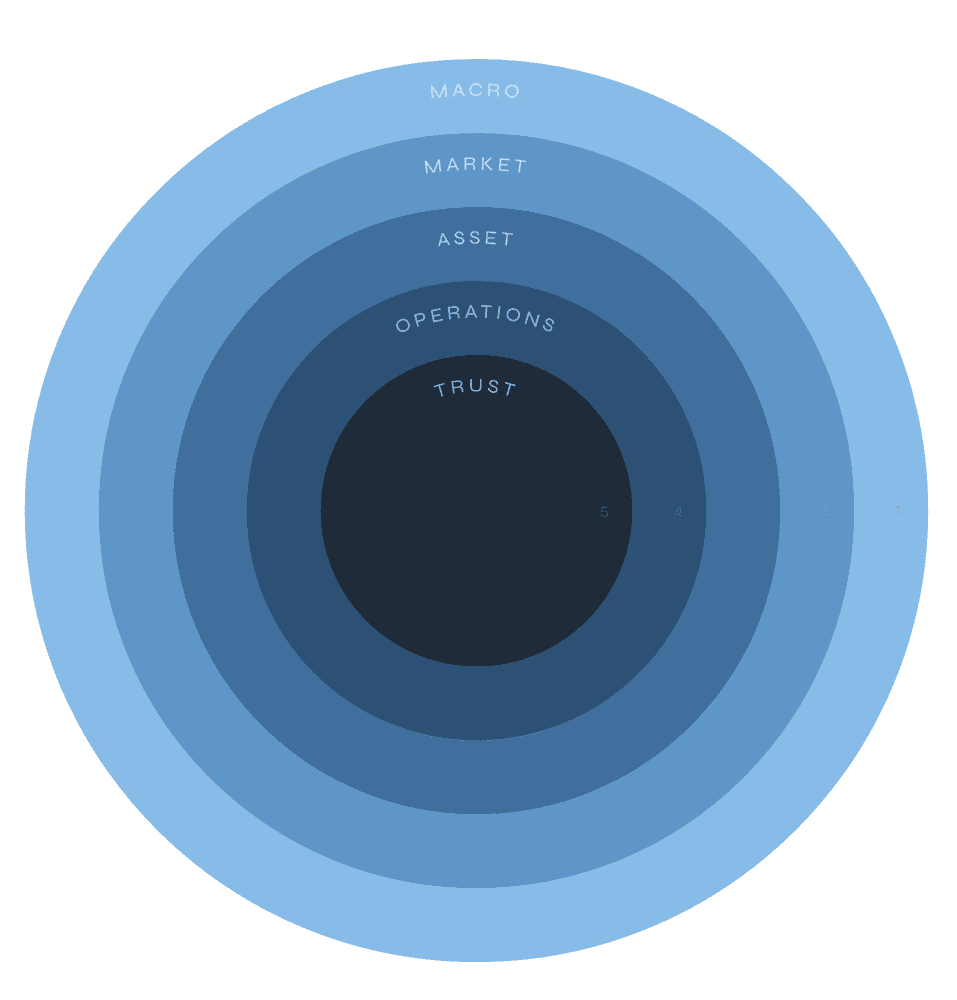
Competitive Advantage Framework
Run Phoenix through the Competitive advantage framework. The Macro tailwind is real but shared, the whole sector has it, so it buys them nothing.
The Market ring went to Energy Fuels and its high-price offtake. Their assets are mostly intangible. They own more IP than anyone else in the field, but thin on the tangible side.
The real moat is Operations: they bought an automation company, and they're the only ones who know how to run it, tacit knowledge is something that the rest are years behind on. Scale that, and the edge turns into a moat.
And the core is already set, offices and buyers across the East, and a process clean enough that even the environmentalists cannot easily bother them.
References
Australian Strategic Materials. (2026, June 24). Energy Fuels transaction announcement [ASX announcement]. Australian Securities Exchange.
Energy Fuels Inc. (2026, June 23). Energy Fuels announces definitive agreement to acquire VAC for $1.9 billion equity value [Press release]. https://investors.energyfuels.com
Hansen, B. D. (2026, July 8). Form 4: Statement of changes in beneficial ownership — Energy Fuels Inc. [SEC filing]. U.S. Securities and Exchange Commission, EDGAR. (CIK 0001385849)
Hodgson, C. (2026, July 10). Rare earths from producers backed by Trump sold to Japan and South Korea. Financial Times. https://www.ft.com/content/9a730895-05d9-4917-beb9-8b742bea1ab7
Phoenix Tailings. (2026, July 2). Phoenix Tailings expands into Asia Pacific, appoints George Kellerman as president [Press release]. https://phoenixtailings.com
Shin-Etsu Chemical Co., Ltd. (2025, October 24). Summary of telephone conference on financial results, first half ended September 30, 2025 [Earnings call summary].
Shin-Etsu Chemical Co., Ltd. (2026, January 27). Summary of telephone conference on financial results, first three quarters ended December 31, 2025 [Earnings call summary].
Kruemmer, T. (2026, April 21). Neo's heavies pilot; BCM and SAM; CNRE Q1 results; impact of PRC H2SO4 export stop; USARE latest antics; more hype from Hastings; Lynas, Arafura, ReAlloys, POSCO and the lot (No. 197) [Newsletter]. The Rare Earth Observer.
Turn your phone sideways to read the charts. They are best on a desktop.
Published by House of Hōma OÜ, registered in Estonia.

