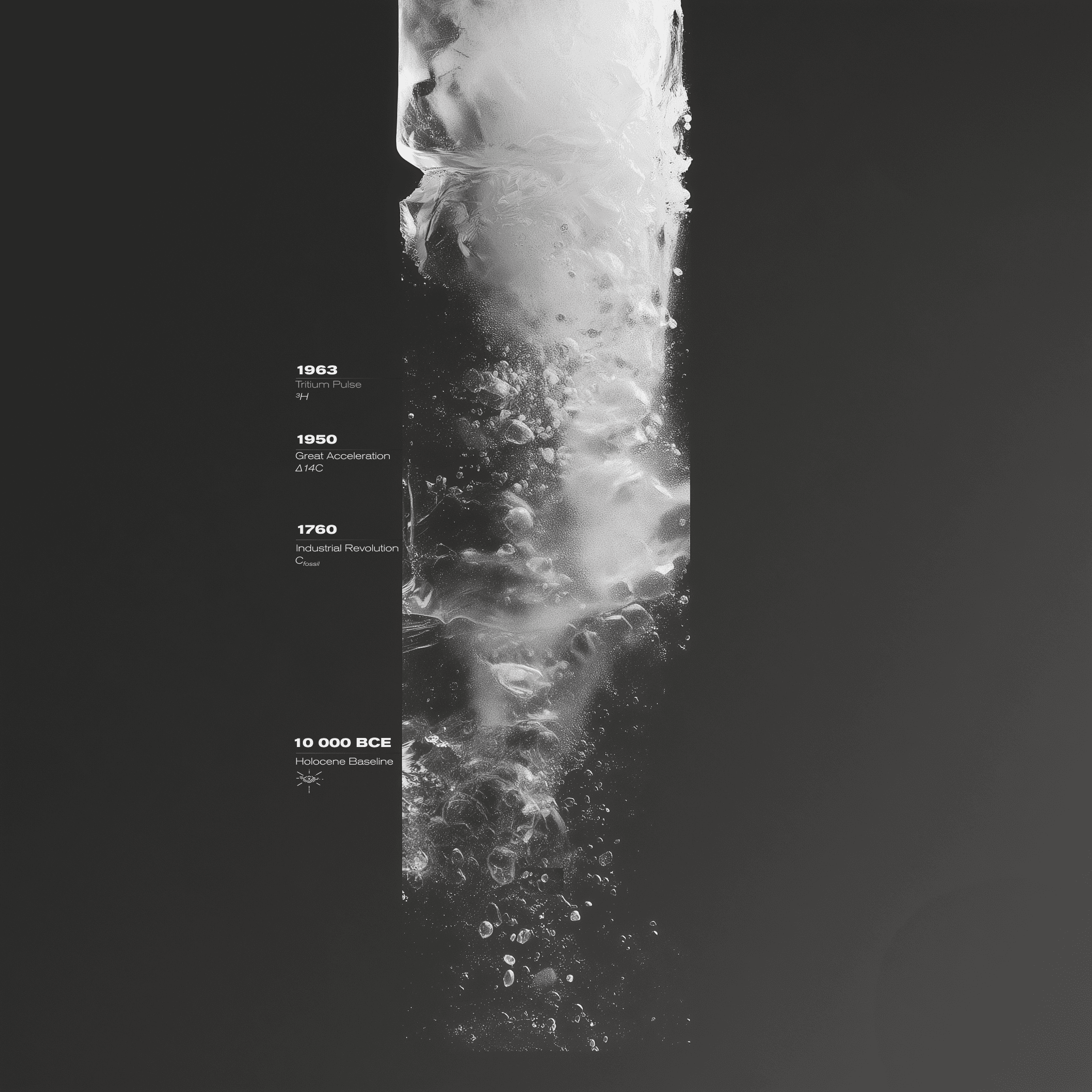

Here is the framework that shows you where the last ones are. The nature changes faster than we can measure it. And we won't be able to measure it again.
Everyone in every industry agrees on "Data is your moat."
And like most things everyone agrees on, eventually, it becomes only half true.
The volume of data was defensible for 20 years. Then the cloud got cheaper, the sensors became cheaper, and the AI models improved. And suddenly, everyone else, with no budget, in a fraction of a second, could collect everything you had.
What comes next?
TLDR: Data is not a moat. Irreversible data, the kind that disappears and can never be captured again, is the moat. The only information worth owning is the kind nobody else can produce. It doesn't exist anymore.
Here is what this looks like when someone actually builds it.
KoBold Metals is valued at over $1 billion. Backed by a16z and Breakthrough Energy Ventures.
And their moat has nothing to do with their algorithm. Well, their software is still state-of-the-art. But it doesn't close the deal.
Their advantage is built on decades of "failed" drilling records from mining projects deemed non-commercial and abandoned. Exclusive data no one owns, and no one can recreate. Those bankrupted compnaies have altered the face of the earth forever. Even if you have the same funding and technology, you cannot own the data.
This isn't a new idea. KoBold didn't invent this logic. They just followed a very old pattern.
Bloomberg built a billion-dollar empire. It had exclusive access to financial data, more complete than anything else on the market.
John Deere did the same thing with soil. Every acre farmed by a Deere machine generated proprietary yield and soil data that no competitor could replicate without physically being in that field, in that season, in that year. Gone.
The pattern is always the same.
The company that owned the data nobody else could get, owned the category.
Now look at where the world is going.
Glaciers are retreating. Ocean floors are being mined. Urban air quality shifts block by block. Subsurface geology gets disturbed the moment a drill goes in. Biological signatures pass through infrastructure once and disappear.
The physical world is changing faster than our ability to measure it.
And the companies that understand this, the ones showing up with sensors, drills, cameras, and fiber optic cables in places most people have never heard of, are quietly building the next generation of unassailable moats.
This is what we call the Disappearing Data Moat.
So what do you do with this?
Three things founders and investors can do right now.
1. Start auditing data irreversibility. The question is "Could a well-funded competitor collect this same data in 18 months?" If yes, you have a head start, not a moat. Find where in your domain the window is closing, and build around that.
2. Treat disappearing conditions as capital. If you operate in physical environments, underground, atmospheric, biological, or operational, map what is actively changing or disappearing in your space. That's not a risk. That's an asset. The earlier you capture it, the longer your service life. Ephemeral data collected today becomes a permanent fixed asset tomorrow.
3. Reframe your investment narrative around irreversibility, not volume. Lead with why nobody else can ever have it. Show the investor that the conditions that produced your dataset cannot be recreated. That single shift, from "we have more" to "no one else can ever get this," will change the entire conversation.
Turn your phone sideways to read the charts. They are best on a desktop.
Published by House of Hōma OÜ, registered in Estonia.