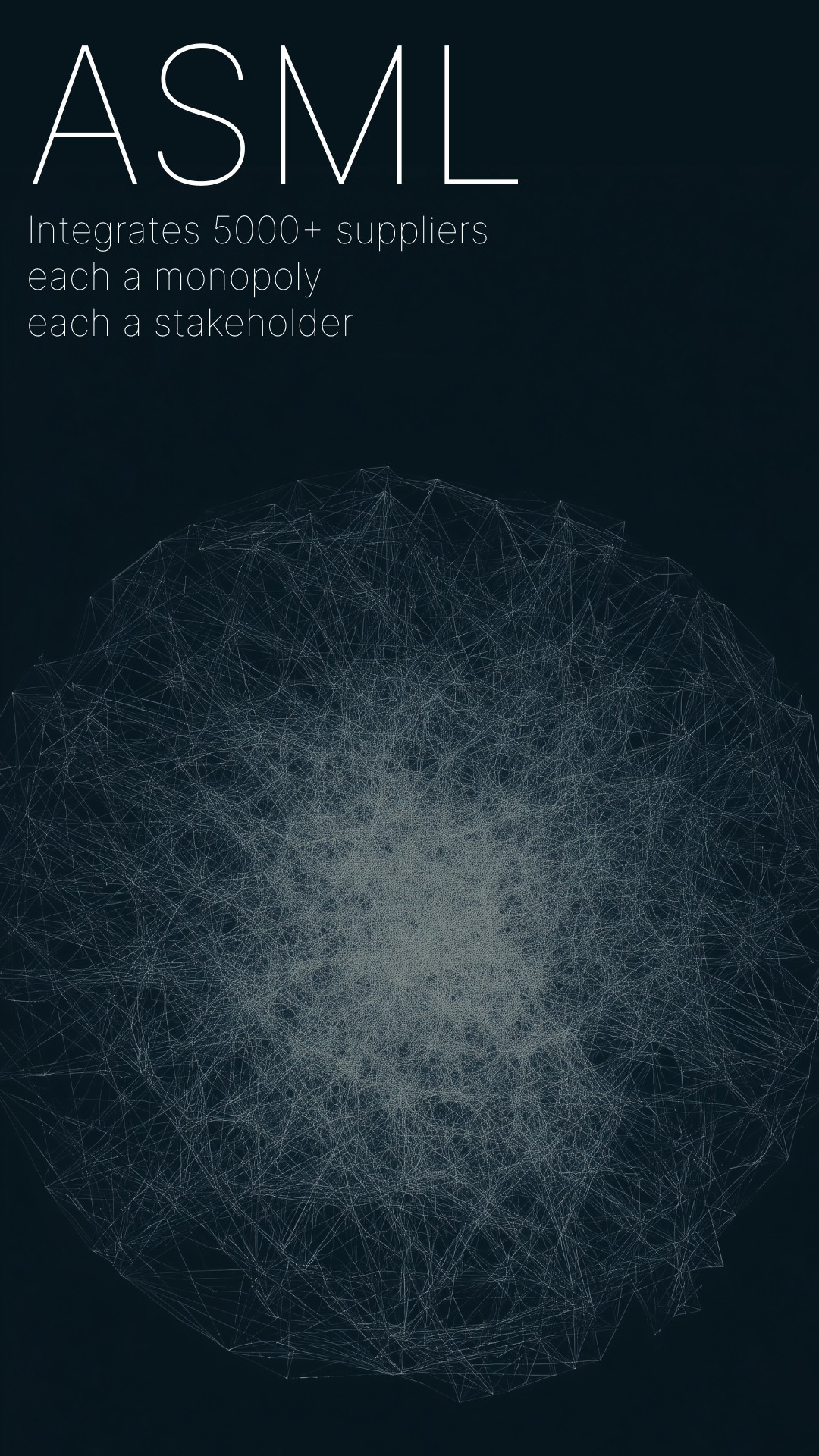

The monopoly itself is built from 5,000 smaller monopolies
The Broke Company That Built the World's Monopoly
Poverty as Strategy
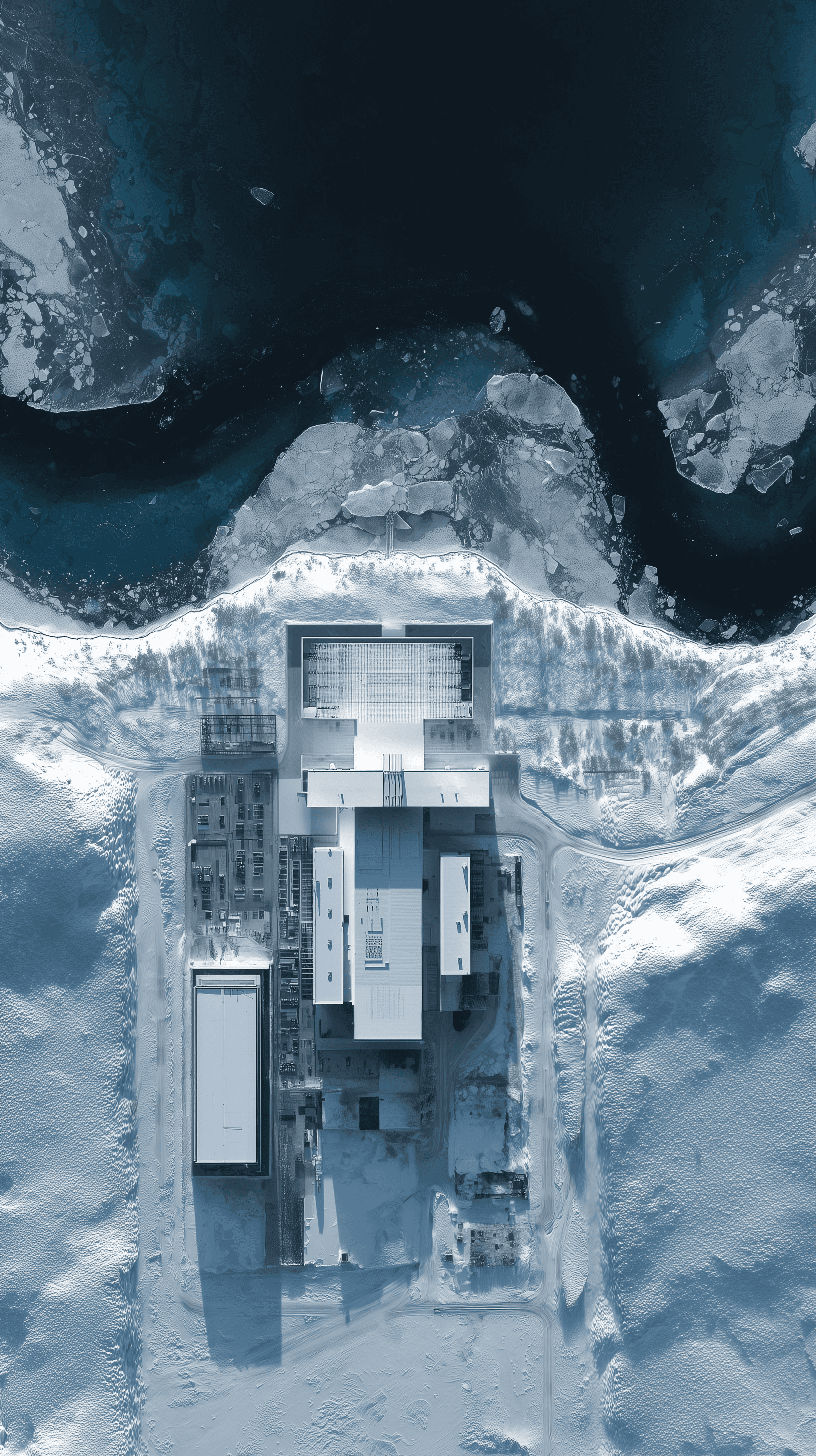
ASML is a $500B monopoly. The moat today is the technology. One EUV machine costs $350M, weighs 180 tons, and ships in three Boeing 747s. No competitor has built one, nor can they. But in 1997, ASML had none of that. Nikon and Canon held 90% of the market. ASML was underfunded, technically behind, betting on physics the scientific community thought commercially impossible: extreme ultraviolet light at 13.5nm, absorbed by air itself.
The assumption is that ASML succeeded despite the lack of capital. That is what. I explore in the following. Their entire competitive advantage was built around the lack of money.
The Numbers That Made It Real
In 2012, EUV development threatened to bankrupt even them. They didn't raise a traditional round. They launched the Customer Co-Investment Program. Intel took 15%, TSMC 5%, Samsung 3%, a combined 23% equity stake, €3.85B in cash, plus €1.38B committed directly into R&D. The world's largest chipmakers locked themselves into ASML's technical roadmap for a decade.
The supply chain runs the same logic. 85% of components outsourced across 5,000+ suppliers. Carl Zeiss makes optics flat to within a single silicon atom. Trumpf makes lasers firing 50,000 times per second. Both monopolies are in their own right. So the ASML monopoly is itself built from 5,000+ monopolies. Replicating the machine means replicating that entire network, which no competitor has the time or capital to do. 96% of all ASML machines ever sold are still in active operation, feeding production data from every wafer back into the next generation of R&D.
Why This Happened and What Comes Next
ASML compounded moat on moat across four decades, the impossible physics bet in 1997, the second-order supply chain in the 2000s, the customer co-investment in 2012, the deliberate cannibalization of their own profitable DUV business to push EUV, and now High-NA at 0.55 numerical aperture with >$10B already invested. Each move reset the barrier to entry.
Capital-intensive deep tech built on vertical integration will keep failing the way Northvolt failed. Northvolt raised $15 billion and built everything in-house. When demand softened, the fixed costs didn't. Bankruptcy in 2024. The funding structure bets everything on patient capital that doesn't stay patient. The founders who survive will be the ones who engineer a structure where customers and suppliers share the cost. ASML turned a hostile environment into a network of co-dependents. Their fundraising itself served the moat by giving suppliers and customers enough incentive to invest and to protect what they'd invested in.
That's the difference between venture capital and what ASML built. VC has a quick mandate and aggressively pursues its own interests. Intel and TSMC understood patience because the alternative was losing Moore's Law.
What You Do With This Before Your Next Meeting
Three things.
First: identify which companies in your market face an existential problem that only your roadmap solves. Those are not customers. They are potential co-investors. If your product is as critical to their survival as EUV was to Moore's Law, their balance sheet should be funding your R&D.
Second: map your supply chain for second-order defensibility. Ask whether a competitor could replicate your product by calling your suppliers directly. If yes, your moat lives in a pitch deck, not in the market. Bring suppliers in at the earliest design stages. Let them co-invest their own engineering resources. ASML ensured no single supplier exceeded 25% dependency on ASML, keeping them stable through downturns without making them captive.
Third: patent aggressively. The distributed knowledge that compounds across your supplier network needs a legal fortress around it. ASML combined open collaboration with strict IP protection
Conclusion
Every fundraising conversation you have, you're trying to explain why you win. Most founders pitch technology. ASML teaches a different answer: you win when you build a structure that forces others to need you before you can prove you're necessary.