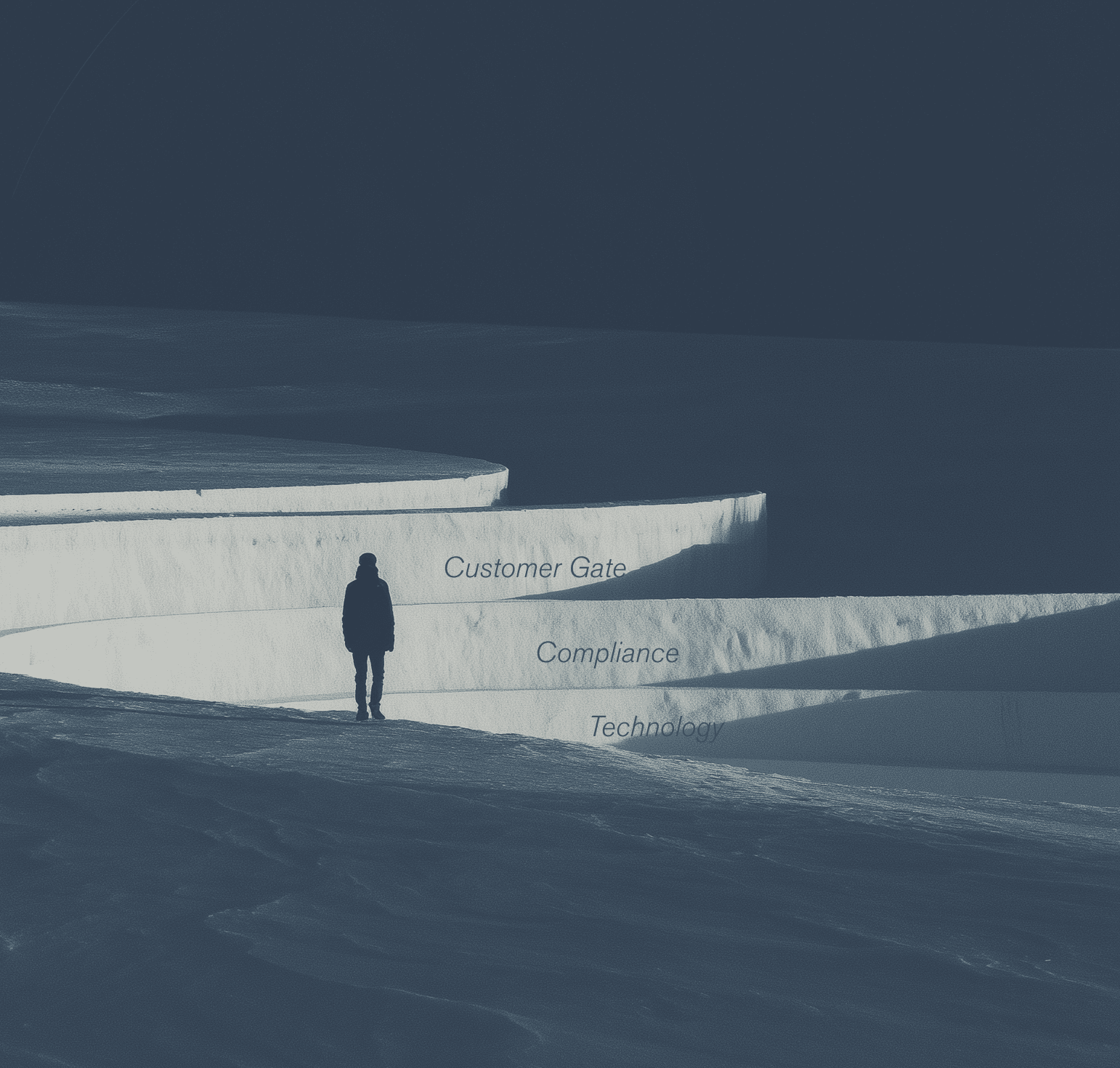

What remains for the competitors is rust and stardust.
What to Expect
The idea is simple: use the data to train your AI, then delete it forever. This means competitors can't even train their own AI, let alone catch up to you.
But you can't delete data from the internet. Once it's online, it stays there forever. This strategy won't work for software companies or most AI businesses today. Keep reading to find out who can actually use this approach.
So who can enjoy this strategy?
First, you train your AI in a physical environment. Then you eliminate that environment so competitors can't follow your path.
Mining companies are a perfect example. They train their AI before they start digging. Then they mine the area and take away the minerals. The environment is now completely different. Competitors can't train their AI on the same conditions anymore. Their sensors and aerial cameras can't find the metals because they're already gone. Their AI has nothing to learn from.
But this doesn't work for every mining company. If there are lots of similar mining sites, competitors can train their models at a different location. Being first doesn't matter much in that case.
So who can really use this strategy?
Aside being the first, you have to satisfy two out of the the three extra criteria:
The Environment Must Disappear
Your training data must come from a physical environment that will be permanently removed or altered after you've completed your training.
Limited Training Locations
The total number of available training sites should be limited. Or your company should hold exclusive operating rights to these locations. This prevents competitors from simply accessing alternative sites to train their models.
Increasing Difficulty Over Time
Each mission should be harder than the last one. This means competitors lose access to training data and they are missing the foundational steps you used to develop your AI capabilities. They have to start with the hardest challenges while you've already climbed the ladder step by step.
Real World Examples
High-Precision Urban Decommissioning (Nuclear/Chemical)
Application
Train AI to navigate and dismantle specific high-risk structures, such as a unique nuclear reactor core or legacy chemical plant.
Moat
Once the facility is decommissioned, the training environment no longer exists. Competitors cannot replicate your training data because the physical site has been destroyed.
Missing Ladder Step
As the first mover, you start with the most well-documented facilities. The remaining sites are older, often lack complete blueprints, and present greater hazards. These need the advanced capabilities your AI developed through earlier, simpler missions.
Deep-Sea Targeted Mining (Rare Earth Nodules)
Application
Train AI on the specific topography and sedimentation patterns of unique nodule fields on the ocean floor.
Moat
The extraction process alters the seafloor. The sediment patterns and mineral layouts that your AI learned from are now gone.
Risk
Competitors might attempt to use synthetic digital recreations of the seafloor for training. But, these simulations lack the real-world data. The sensors captured data during actual operations, the vibrations, resistance, and physical feedback that only exist during extraction.
Precision Environmental Remediation (Oil Spills/Toxic Plumes)
Application
Train AI to track and remove a unique, migrating plume of toxins within a specific groundwater system.
Moat
Once you've remediated the plume, that specific dataset disappears with it. The fluid dynamics and chemical interactions in that particular environment can never be captured again.
Category King Potential
By solving a specific type of contamination first, you own the only real-world training data for that unique chemical-soil interaction.
In Practice
The Critical Advantage: Hardware-Software Feedback Loop
The moat extends beyond having the data into having the hardware (sensors, robotics, and measurement tools) physically present to capture the "vanishing state" of these environments. Your equipment witnessed and recorded conditions that will never exist again.
As mentioned earlier, zero-shot models and advanced simulators could eventually challenge this advantage. But with today's technology, you remain secure in your position as category king.
Turn your phone sideways to read the charts. They are best on a desktop.
Published by House of Hōma OÜ, registered in Estonia.